

Hmm, I wonder what all these Presidents mean by “New World Order”.
The great reveal was the Covid scamdemic.
A virus has never been isolated, therefore there is 0 evidence that viruses exist.
You all saw the coordinated Covid-19 scamdemic response:
Rival states exhibited near-identical public-health playbooks (lockdowns, mandates, travel controls, QR systems).
International Health Regulations (2005; updated 2020s): Most states (rivals included) accept reporting and response obligations, enabling synchronized restrictions.
Global Travel Regime (APIS, PNR, biometrics): Shared data formats and pre-clearance standards make identity-first mobility interoperable across blocs.
It was the great mask-off moment and these “adversarial” governments have tried so hard to pretend they aren’t on the same team since.
The question of course is: are you going to believe their words or their actions?
The US and China/Russia or more broadly the West and BRICS pretend to be in competition and meanwhile:
They are all poisoning their citizens with the same vaccines (heavy metals) and big pharma concoctions for viruses that have never been isolated.
Robbing their citizens with fiat, inflation and taxation.
All these countries that hate each other meet in Switzerland every month to coordinate policy.
All these countries are spraying their citizens with heavy metals from the sky.
All these countries are blasting their citizens with 5G (6G upcoming).
All these countries agreed to forbid private exploration of Antarctica during the Cold War when they allegedly hated each other.
All Central Banks coincidentally have matching liquidity cycles and coordinate to cause crises/inflation.
All rival states exhibited near-identical public-health playbooks (lockdowns, mandates, travel controls, QR systems) during Covid-1984.
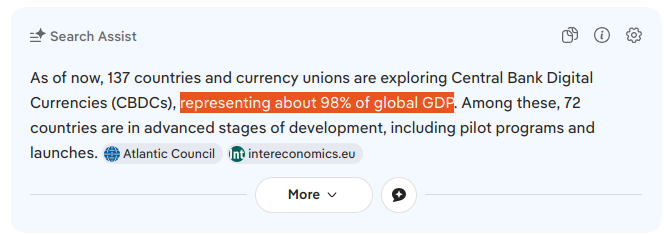
All of these countries (98% of global GDP) are simultaneously developing CBDCs, Digital IDs and AI governance.
Across all these countries, investors do NOT directly own broker-held stocks, bank deposits, bonds in custodianship, mortgages, or lien-encumbered land; assets held via custodians/CSDs (DTCC, Euroclear, Clearstream, etc.) are legally collateralizable and sweepable in failure. The legal structure is globally synchronized (a relatively recent shift).
All of these countries continue investing billions into developing “Quantum Computers” which seem completely nonsensical:
Quantum code breaking? You’d get further with an 8-bit computer, an abacus, and a dog
Interestingly enough, some of the nuclear scientists are developing their “quantum computers”. From one scam to another.
Did you know that Russia and China love tokenization? Difficult to say who loves tokenization more between them and Larry Fink.
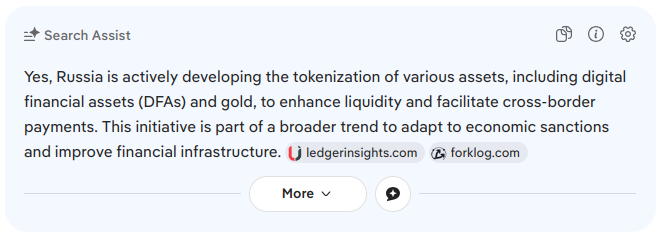
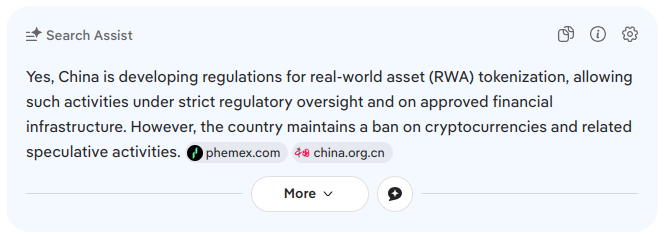
It’s kind of crazy for them to be building all these interoperable systems on top of the same standards while competing which each other.
The closer you get to money, settlement, identity, and data, the more synchronized it gets.
Whether you call that “One World Government” or “multi-faction cartelized governance” is branding. The power patterns are there either way.
Why “enemies” coordinate (the 6 structural convergences)
States appear adversarial on the surface, but their structural incentives converge far more often than people realize.
That’s why even “enemies” like the US, Russia, and China act in concert when it comes to systemic rules.
Monopoly on Force & Money
Every state protects force + issuance. Fiat/CBDC is the control layer, not a policy choice.
Outcome: no major power defects from fiat rails; CBDC pilots surge because interoperable control is leverage.
Stability > Rivalry
Most wars are theater; credit/settlement collapse ends rule.
Deaths are real. Pretext for wars is not.
In artificial shocks, states harmonize: liquidity windows, emergency powers, expanded surveillance — across blocs.
Narrative Preservation
Legitimacy is an asset. Cohesion beats “truth”.
Outcome: centralized media norms, staged symbolism, curated science/tech narratives when needed.
Asset Legibility & Seizability
Title/custody law converges globally so collateral can be swept in crisis (watch The Great Taking from David Rogers Webb).
Implication: broker-/custodian-held claims are policy-contingent; true self-custody is scarce optionality.
Standards as Sovereignty
Identity, payments, provenance, telecom: one fabric, many flags.
“Interop” = policy dials that work cross-border. Defection = loss of leverage.
Information Sovereignty
All blocs share the same fear: lose the infosphere → lose compliance.
Outcome: convergent AI governance, moderation, provenance mandates; different logos, same knobs.
How coordination happens without a “smoking gun”
Standards + perimeters.
Standards (NGOs, fora, regulators) emit the same verbs: attest, revoke, trace, prove, rollback.
Perimeters (banks, clouds, app stores, ISPs, card networks) flip Acceptable Use Policies; law becomes optional.
Theater guardrails (what they avoid vs what they allow)
Red lines (would expose unification):
Same vendor/OS visibly running rival militaries/ministries.
Shared public root-of-trust keys (cross-signed national ID PKI).
Zero-carveout sanctions (no licenses, no waivers).
Identical crisis timing to the hour.
Single global wallet/consumer brand.
Direct, visible cross-holdings in crown jewel companies.
Green lines (safe to cross):
Co-author standards (3GPP, C2PA, FATF) with 80–90% overlap.
Export controls that withhold edge but allow n−1.
Quiet swap lines, emergency aid, IXPs/peering “for resilience”.
Academic/health data pilots that normalize consent lineage.
Stablecoin/CBDC corridors with differing retail narratives, shared back-ends.
Canonical “curated rivalry, shared plumbing” domains
Money stack: BIS/IMF/Basel/FATF/CRS, Fed swap lines → one supervisory grammar.
War & security: NPT/SALT/START/Interpol/UN1373 → managed escalation, shared takedown norms.
Tech rails: 3GPP lawful-intercept hooks, content provenance (C2PA), global eID schemas.
Choke-points: SWIFT/ICANN, Suez/Malacca protection, energy interdependence with waivers.
Trade & supply: WTO accession (China), rare-earths/semis controls with carveouts.
Crisis playbooks: IHR, global NPIs, coordinated fiscal/Quantitative Easing → policy sync by template.
Market discipline: rating/index oligopolies, Basel market-risk/Value at Risk (VaR) orthodoxy → predictable de-risking states can time.
Synchronization Between Rival Countries: Selected Examples
A. Public Health & Emergency Response
Covid-19 Response: Rival states exhibited near-identical public-health playbooks (lockdowns, mandates, travel controls, QR systems).
International Health Regulations (2005; updated 2020s): Most states (rivals included) accept reporting and response obligations, enabling synchronized restrictions.
Global Travel Regime (APIS, PNR, biometrics): Shared data formats and pre-clearance standards make identity-first mobility interoperable across blocs.
B. Foundational Treaties & “Neutral” Forums
Antarctic Treaty (1959): 58 signatories, including the Soviet Union during the Cold War — hard cooperation in a rivalrous era.
Bank for International Settlements (1930– ): Created for German reparations; evolved into a neutral club for central-bank cooperation that persisted through WWII.
C. Monetary Architecture & Reserve Coordination
World Wars Finance (1914–45): US/UK/Allies quietly synchronized gold/FX controls and capital management to keep war finance functioning.
Bretton Woods (1944) → USD System: Fixed-rate regime anchored on the dollar; IMF/World Bank formed to discipline periphery liquidity.
Post-1971 Petrodollar Bargain (1973– ): US–Saudi–OPEC: oil priced in USD; surpluses recycled into US assets — dollar demand after gold exit.
Plaza (1985) & Louvre (1987) Accords: G5/G7 coordinate FX revaluations to manage US/EU/Japan imbalances — liquidity steered by committee.
Fed Swap Lines & Crisis Cartels (2008, 2020): US Federal Reserve extended dollar lifelines to major foreign central banks (rivals accessed via intermediaries) to prevent system breaks.
D. Prudential, Risk & Compliance Harmonization
Basel I/II/III (1988– ): “Rivals” adopt common bank-capital rules — harmonized definitions of “safe” assets.
Basel Market-Risk & Value-at-Risk Orthodoxy: Regulators converge on similar risk models, forcing pro-cyclical behavior that can be centrally backstopped.
FATF AML/KYC (1989– ): Global identity-tied finance; anonymity made costly; visibility centralized.
OECD CRS (2014– ): Cross-border tax-information exchange widely embraced; standardized surveillance of ordinary capital.
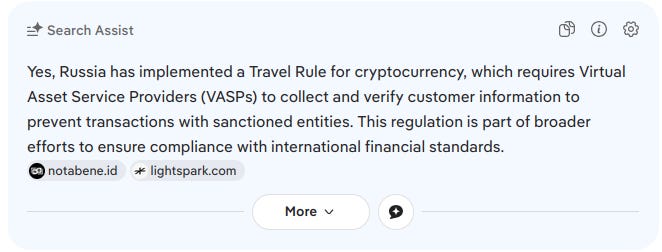
Cloud & Crypto Compliance Harmonization: Travel Rule, VASP registration, and custody converge across jurisdictions to return novel rails to visibility.
There’s no way Russia has implemented the Travel Rule the same way the EU and the US have. Oh, wait.
E. Payments, Identity & Global Switches
SWIFT (1973– ) & ICANN (1998– ): Single global payments messaging and root DNS — “adversaries” share the same choke-points.
Identity as Universal Substrate (ICAO ePassports, eID): Machine-readable identity adopted globally, including rivals.
CBDC Development: 137 countries and currency unions (≈98% of global GDP) developing CBDCs — remarkable coordination for supposed “rivals”.
F. Capital Ownership, Collateral & Legal Synchrony
“The Great Taking” (David Webb): Across jurisdictions, investors do not directly own broker-held stocks, bank deposits, bonds in custodianship, mortgages, or lien-encumbered land; assets held via custodians/CSDs (DTCC, Euroclear, Clearstream, etc.) are legally collateralizable and sweepable in failure. The legal structure is globally synchronized (a relatively recent shift).
How crazy is it that Russia left roughly 200-300B EURO, mostly parked at Euroclear in Belgium and then attacked Ukraine?
I thought they were aware that their assets are likely to get frozen. These guys must be really stupid.
Here is a photo of the governor of the Central Bank of Russia debating whether they should move their 300B euros outside of Euroclear before attacking Ukraine.

Of course, there could be an alternative explanation that they wanted to get their assets frozen because of “deglobalization”, to normalize the Great Taking, and to give an excuse for ~all Central Banks to simultaneously start stacking gold because the “dollar has been weaponized”.
It’s almost like they are preparing to reset the financial system, so they can introduce CBDCs, Digital IDs and AI governance.
So they are building new, interoperable financial and governance systems while hating each other. Hmm.
G. Energy, Commodities & Supply
IEA Formation (1974): Consumer countries — often rivals elsewhere — coordinate stock releases and demand curbs after oil shocks.
Russia–Europe Pipelines (1970s–2020s): Even at peak tensions, energy interdependence expanded (e.g., Druzhba, Nord Stream) — mutual hostages as stability.
US–USSR Grain Deals (1970s): Massive US grain shipments to the USSR during Cold War stress to avoid systemic food shocks.
Suez/Malacca Choke-point Doctrines: Quiet cooperation to keep critical maritime arteries open — commerce before conflict.
Rare-Earths & Critical-Minerals Détente: Despite rhetoric, quotas and flows are often rebalanced rather than severed to prevent supply-chain collapse.
H. Trade, Industrial Policy & Globalization
WTO Accession of China (2001): US/EU admitted a strategic rival, enabling offshoring and disinflation while preserving dollar recycling.
ETSI/3GPP Telecom Standards (2G→5G; 6G upcoming): US/EU/China vendors co-author cellular standards; lawful-intercept hooks standardized — global interop with in-band control options.
I. Space & Technical Détente
Apollo–Soyuz (1975) & ISS (1998– ): Space faking cooperation with adversaries — de-escalation channels and shared technical norms even amid rivalry.
J. Sanctions, Law Enforcement & Information Control
Interpol, MLATs, UN 1373 (post-2001): Rivals share law-enforcement and counter-terror finance data — normalized cross-border seizure and handoffs.
MLAT/Cloud Data Access (CLOUD Act–style accords): Cross-border legal taps into large-tech clouds, including data on rivals’ citizens — paperwork-based surveillance.
Global Sanctions Choreography with Carve-Outs: Even “maximum pressure” actions leave payment/food/energy lanes — pain without collapse.
Arms-Control “Violations” Managed, Not Ruptured: Cycles of accusation/sanction rarely dissolve core channels; controlled rivalry under shared guardrails.
Global Takedown Norms: Child-safety/terror frameworks justify harmonized de-platforming pipelines for rapid narrative control with minimal treaty work.
C2PA / Content-Provenance Push (2020s): Cross-bloc effort to watermark media at creation — restore attributable flows; control over “open”.
K. Digital Money & “Rival” Convergence
Central-Bank Coordination in Wars (1914–45): Quiet gold/FX controls and capital management kept the monetary core intact under emergency rules.
CBDC Synchronization (current): Extensive parallel development suggests pre-agreed design and policy patterns despite geopolitical rivalry.
I can go on and on but you get the point.
What this reveals
Rivalry is curated; plumbing is shared. When control or continuity is threatened, standards, swaps, and back-channels override ideology.
One fabric, many flags. Payments, identity, telecom, and provenance standards are global fabrics with policy dials.
Crisis = parameter update. Every shock resets the global knobs, not the fabric.
Across domains — public health, identity, money, risk, energy, trade, space, sanctions, and information control — formal rivals repeatedly synchronize standards, infrastructure, and legal frameworks. The pattern preserves interoperability, centralized visibility, and policy levers, even when public narratives emphasize conflict.
If a One World Government existed, what would the signs look like?
From a pure incentives/control lens, you’d expect:
(A) Deep policy synchronization on the core rails
Not just “similar”, but:
Same monetary architecture:
Fiat everywhere
“Independent”-but-aligned central banks
Basel-style capital rules
Global lenders of last resort
Same financial surveillance standards:
FATF-style AML/KYC
Travel rule for value transfers
Sanctions lists mirrored across blocs
Same digital rails direction:
Move toward cashless
ID-linked finance
Push toward CBDCs and/or state-supervised stablecoins
(B) Shared legal templates for emergencies & asset control
Very similar “emergency powers” laws:
Ability to suspend rights
Freeze accounts
Control movement
Harmonized securities/collateral law:
Dematerialized securities
Central clearing / central counterparties
Legal pathways to haircut or convert liabilities in a systemic event
(C) Coordinated crisis scripts
Different costumes, same playbook, e.g.:
Shock → emergency declaration → coordinated sanctions/controls
Synchronized talking points: “for your safety”, “extraordinary but necessary”
Same ratchet pattern:
Crisis
Emergency measures
Partial rollback
Permanent residue in law/infra
(D) Convergence on identity & data control
Cross-country moves toward:
National ID numbers used across tax/health/banking
Pressure for real-name regimes online
Health, financial, travel, and legal records interoperable across borders
(E) Global meta-institutions that sit above elections
You’d expect strong, durable bodies that:
Are not elected
Write “standards” that become de facto law
Coordinate crisis response, banking rules, health policy templates, etc.
(F) A small set of technical choke-points
Rather than thousands of equal players, you’d expect:
A few global cloud providers
A few payment networks
A few app stores / OS ecosystems
A few data/identity providers
Because controlling 10 switches is cheaper than controlling 10,000.
(G) Managed conflict, not elimination of conflict
If control > fairness, stability > truth:
You wouldn’t erase all conflict. You’d bound it:
Proxy wars instead of total wars
Sanctions instead of kinetic confrontation between major blocs
Conflict becomes a tool for:
Domestic cohesion (“external enemy”)
Policy acceleration (“emergency” justification)
Are we seeing those signs?
I’ll go domain by domain and be blunt about what matches and what doesn’t.
Money & credit
We actually do see:
Universal fiat + central banks
Basel capital rules echoed globally
Dollar-based system with swap-lines as discipline/incentive
Global AML/KYC/travel-rule convergence
Synchronized CBDC explorations (now covering ~all major economies)
This looks exactly like:
“We want a globally interoperable, controllable money & credit system.”
Still, you do not need a literal “One World Government” to get this; you need:
A structurally dominant reserve issuer
Strong coordination forums (BIS, IMF, FSB, G7/G20)
Shared incentives among large creditors and incumbents
However, the effects look similar to a hidden governance layer.
Law, securities, and collateral
We do see:
Central clearing houses, rehypothecation, omnibus custody
Legal pathways for bail-in, forced conversions, resolution mechanisms
Cross-border convergence in netting/close-out rules
This fits the “Great Taking infrastructure” frame: laws are written so that in a true (or artificial) systemic event, claims can be re-written to preserve the survival of the system.
Again, whether you call that “One World Government” or “aligned technocratic class” is labeling. The control potential is real.
Crisis choreography
I’ve already pointed at:
Global COVID scamdemic responses:
Lockdowns, emergency powers, similar health passes
Narrative alignment across media in many “adversarial” countries
Financial crises (2008, 2020):
Swap-lines extended, QE coordinated
Same language about “systemic risk” & “whatever it takes”
From a revealed-preference lens, the playbook is shock → emergency → centralized coordination → partial rollback → lasting residue.
Again: you don’t need a single puppet master to get here; you need:
Shared training/background among elites
Institutional coordination channels
Strong path dependence: once one big player takes a route, others copy to avoid blame.
But: the script-like similarities are there.
Identity and data
We see:
More and more national ID used across banking, telecom, tax, health
KYC & beneficial ownership rules expanding
Pushes for age verification and “online safety” that, in practice, mean identity linkage
Plus:
Emerging frameworks insisting on provenance and traceability for data & content (C2PA, AI governance frameworks, etc.)
This is progressively turning anonymous interaction into a niche, not the default.
Chokepoints: cloud, payments, OS, comms
Reality matches the theory almost perfectly here:
Cloud: AWS, Azure, GCP dominate
App stores/OS: Apple + Google (mobile), a few desktop OSs
Payments: Visa/Mastercard + a handful of national schemes
Messaging: a few big platforms, all pressure-able via app stores or local infra
This is where control > fairness is most visible:
You don’t need to explicitly ban behavior; you pressure app stores, banks, or clouds.
Laws become parameters, enforced by infra owners.
Where critics say it doesn’t look like a single monolith
Trying to argue the other side:
US vs China tech stack bifurcation (this would be too obvious):
“Competing” clouds, chips, standards, platforms
Export controls, entity lists, sanctions
Russia sanctions / energy politics are extremely costly and arguably not “pure theater” (allegedly).
“Competing” currency blocs and capital controls are “real”.
To fit pure “One World Government”, you’d have to argue:
All of this is tightly scripted factional theater to manage domestic consent and justify control upgrades.
Could be, but that’s a much stronger claim than, “Global elites heavily coordinate where their interests align and tolerate conflict where it’s useful.”
Still:
There is a thick, transnational layer of coordination (finance, law, surveillance, infra)
There might be multiple factions within that, not a single unified brain
They might compete in some domains and collude in others
The closer you get to money, settlement, identity, and data, the more synchronized it gets
Whether you call that “One World Government” or “multi-faction cartelized governance” is branding. The power patterns are there either way.
What this implies if you accept the One-Stage premise
If we adopt my premise as a working lens (not as proven fact):
“Assume it is one stage, same directors, different actors.”
Then:
Signs that fit that lens very well
Full globalization of fiat + Basel + AML/KYC
Convergent emergency powers legal structures
Coordinated CBDC/stablecoin development
Choke-point concentration in cloud, OS, payments, comms
Shared narratives: extremism, disinfo, public health, climate, cyber
These are exactly the systems you’d build if you wanted:
Programmable, surveilled money
Programmable, surveilled movement
Programmable, surveilled speech
across nominally separate “countries”.
Managed multipolarity, not true systemic conflict
Expectation
A real multi-polar world with no One World Government would eventually produce:
Deeply divergent capital controls,
Completely incompatible financial architectures,
Genuine “Bretton Woods 3” fracture.
Under a One World Government, you’d expect:
Theatrical conflict:
sanctions,
tariffs,
proxy wars,
But underneath:
shared dependence on the same CB/BIS architecture,
shared embrace of:
dematerialized securities,
centralized CSDs,
AML/KYC regimes,
digital ID,
crisis templates.
East vs West becomes allocation of narrative roles, not separate civilizational stacks.
CBDC + tokenization
One World Government expectation: parallel CBDC projects + tokenization of everything.
Reality:
Major blocs all running some flavor of CBDC pilot or research:
e-CNY,
digital euro work,
Fed + regional notions,
dozens of smaller countries exploring or piloting.
Banks/AMs pushing tokenization of:
treasuries,
money-market shares,
repo collateral,
occasionally gold.
Looks like: same direction, different marketing. That’s consistent with a shared end-state: digital rails that don’t care if the asset base shifts from “USTs only” to “USTs + revalued gold”.
Control over escape rails
Why haven’t any of these countries defected to a neutral reserve asset — e.g. BTC or Gold. Kind of strange.
One World Government expectation:
Physical gold:
De-emphasized for retail,
Channelled into paper forms where possible,
Some tolerance for self-custody because share is tiny.
BTC:
captured via:
ETFs,
regulated exchanges,
KYC/AML rules,
travel rule.
Medium-of-Exchange usage frictioned:
tax,
licensing,
narrative association with crime.
Reality:
Most “gold exposure” offered to the public = ETFs, unallocated accounts, bank products (aka perfect Great Taking fodder).
Self-custody gold niche exists but is:
low status,
mild legal/reporting risk,
increasingly surveilled when re-monetized (sales > thresholds, etc).
BTC:
paperization (futures, ETFs, notes) is advancing,
MoE usage is heavily KYC’ed on- and off-ramps,
legal/regulatory moves consistently target:
privacy tools,
non-KYC rails,
“unhosted wallets”.
That’s exactly the “managed SoV corridor + MoE friction” picture I’ve described in other articles.
What are the implications?
If you accept the one-stage hypothesis, then at a practical level:
Default paths (app stores, banks, social platforms) will keep tightening around ID + provenance + programmable money.
Parallel, non-default paths (self-custody, off-grid, alternative comms) become:
Harder
More niche
More morally framed as “dangerous” or “illicit”
You don’t need to believe in a literal One World Government to see that the direction of travel is:
From anonymous → identified
From cash → traceable digits
From ad hoc law → parameterized enforcement
That is already visible. The only real question is:
To what extent is this centrally coordinated vs. emergent from shared incentives and toolkits?
In my opinion, the distinction matters less than the trajectory.
My top 3 favorite actors
Here are my top 3 actors at present.
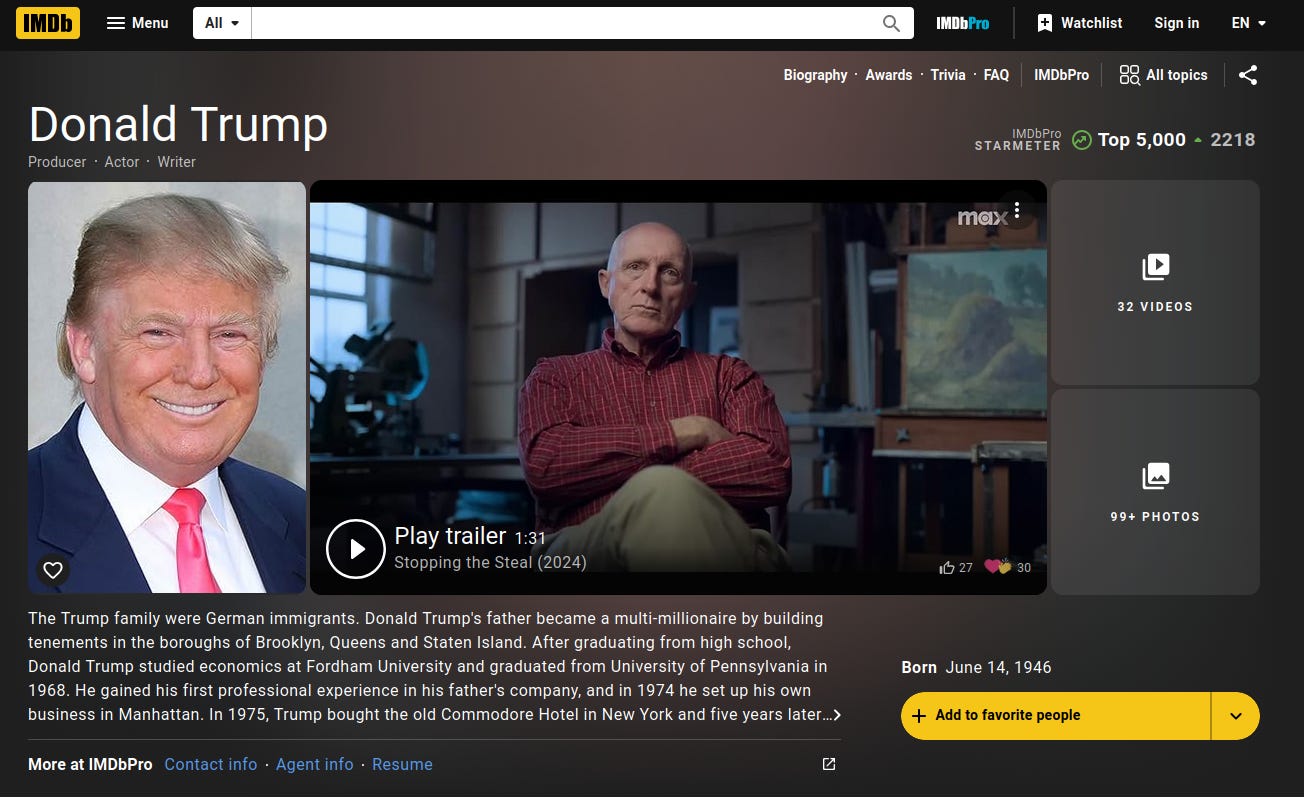
1) Donald Trump
It's a close one between him and #2, but he got the nod because of how he pretended to get shot in the ear. Incredible performance.
He is probably the lowest IQ of the 3, but it doesn't matter because 100D chess.
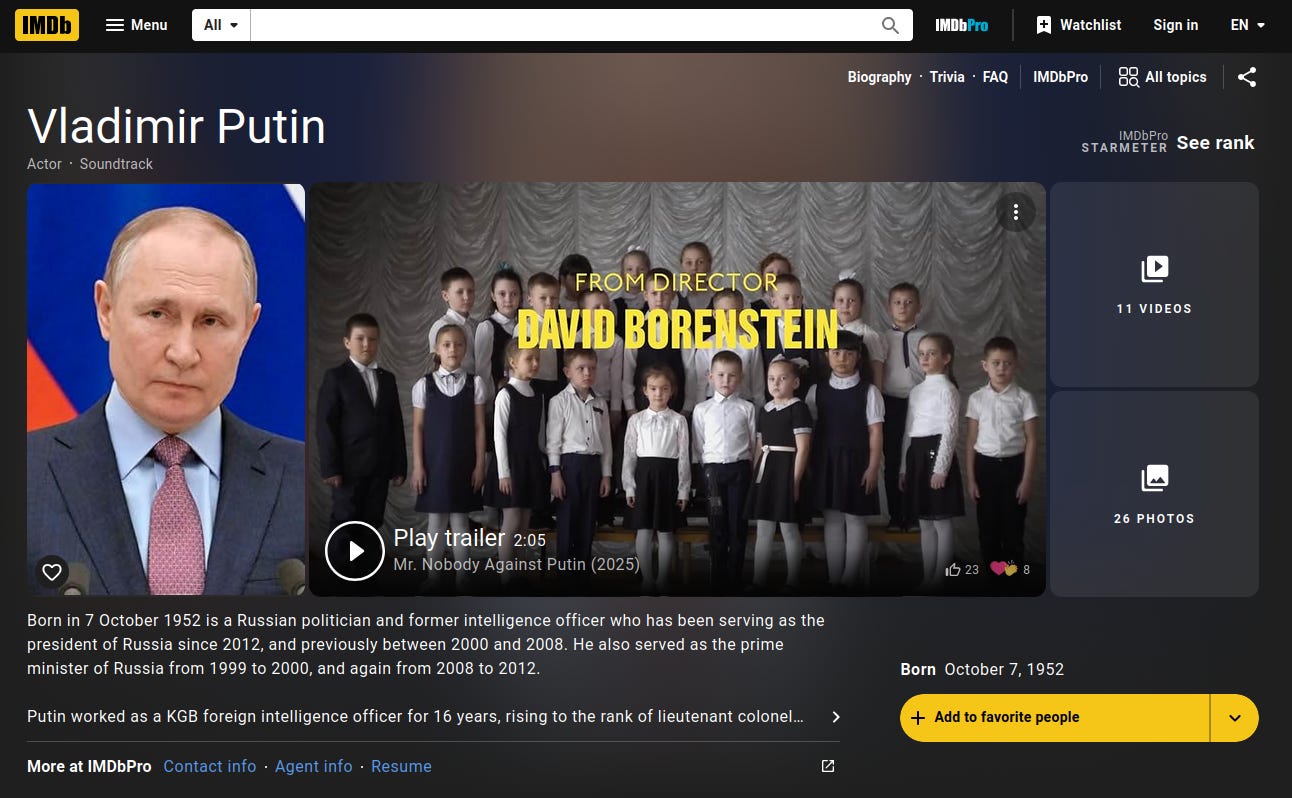
2) Vladimir Putin
This actor served in the KGB (=CIA) eventually reaching the rank of lieutenant colonel. He later auditioned for the role of president and secured the role.
Securing the role was the result of not only the actor’s skill and suitability for the role but also his ability to navigate the complexities of the casting process.
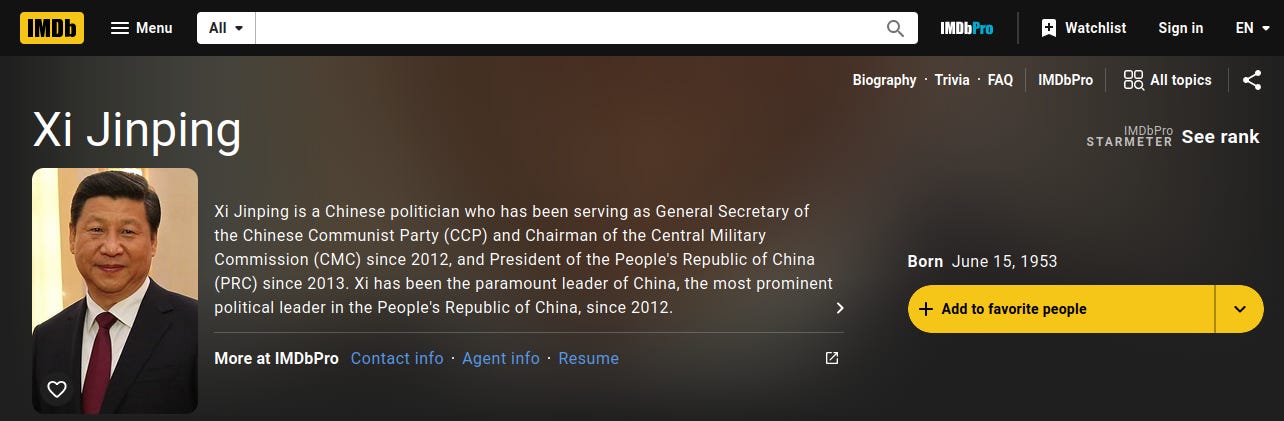
3) Xi Jinping
This actor is a bit stiff. Despite his minimal dialogue, he still contributes to the scene.
Any of these actors can send you to die in a bankers' war of their choosing, inject you with heavy metals for "your safety" for a virus that doesn't exist, and blast you with 5G, while they continue to build the CBDC, Digital ID, AI governance regime.
These actors have coordinated incredibly well while pretending to hate each other:
Full globalization of fiat + Basel + AML/KYC
Convergent emergency powers legal structures
Coordinated CBDC/stablecoin development
Choke-point concentration in cloud, OS, payments, comms
Shared narratives: extremism, disinfo, public health, climate, cyber
These are exactly the systems you'd build if you wanted:
Programmable, surveilled money
Programmable, surveilled movement
Programmable, surveilled speech
across nominally separate "countries".
All of these actors coincidentally support the same direction of the world:
From anonymous → identified
From cash → traceable digits
From ad hoc law → parameterized enforcement
Although most people don’t know this yet, we are in the most important fight of not only our generations but the most important fight after the last reset.
For most people, there is no coming back from where we’re headed.
I’ll leave you with some predictions made by an anonymous user on a forum in 1997.
Just about every country officially participates in UNESCO which doesn't do anything except cover up the past and aid in the rewriting of history and redefining who and what we are.