

If you need more context on why I think we are nearing a financial reset, read:
In this article, I’ll outline what the period after the reset looks like.
1. Big picture: what “after the reset” actually means
“After the Freegold reset” isn’t 48h after the panic (Great Taking) weekend.
It’s 2–3+ years later, once:
The Great Taking sweep has already:
Haircut or vaporized a big slice of dematerialized claims (securities, funds, ETFs, rehypothecated collateral).
Pulled a lot of underlying assets (including bullion bank gold, ETF vault metal, prime RE/infra) into sovereign / CB / resolution-vehicle hands.
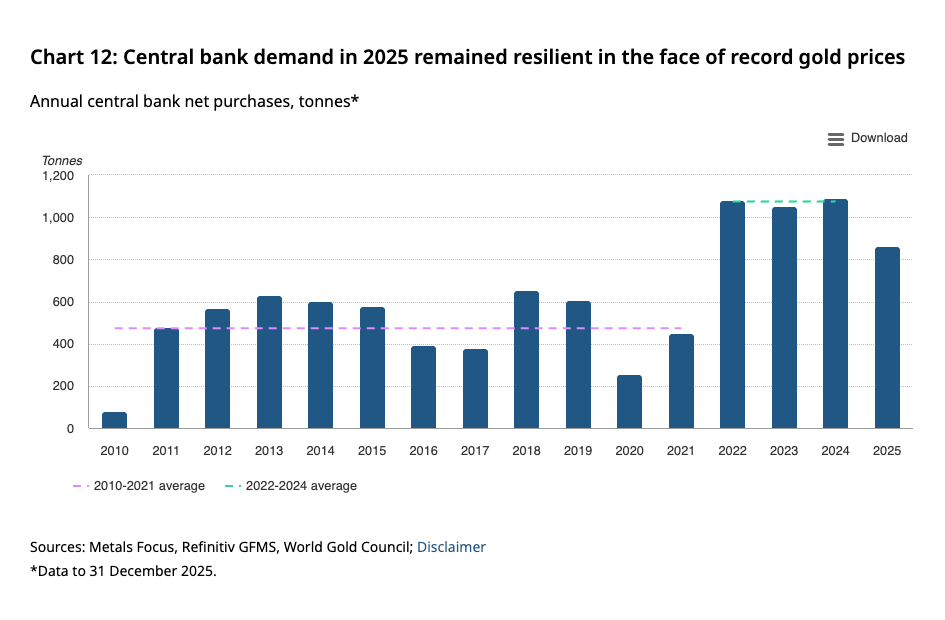
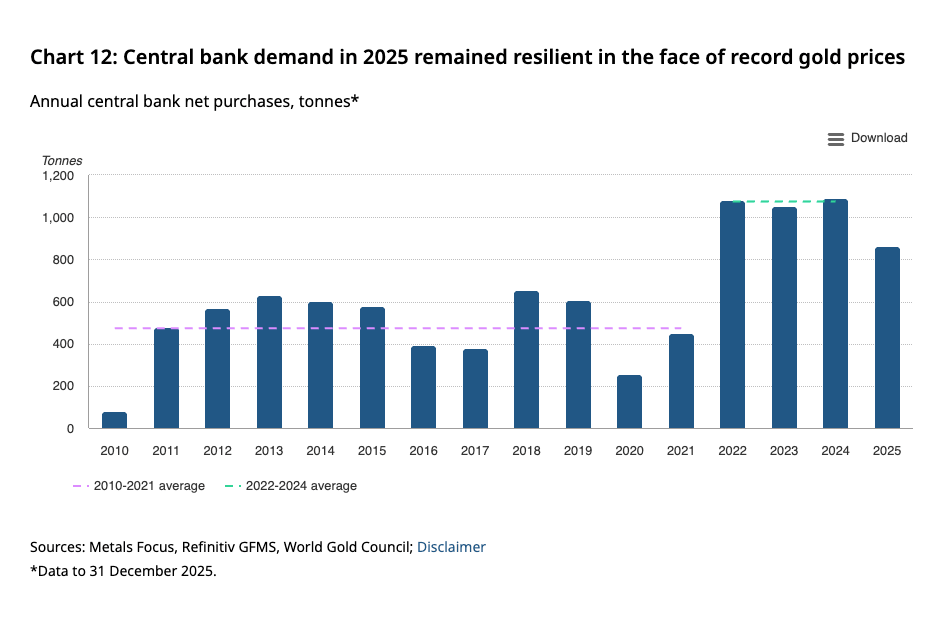
Gold has been visibly revalued (Freegold style):
Physical gold on CB balance sheets is now worth many times more in fiat terms.
CBs openly or semi-openly mark it to market and talk about “stronger balance sheets, safer reserves”.
A new digital rail stack is live:
CBDCs (wholesale + retail) are mainstream.
Most securities are tokenized on permissioned ledgers.
Identity + AML + provenance are welded into everything.
The legacy paper stack exists but is neutered:
New securities / funds exist, but with explicit bail-in, lockup, and “resolution” clauses.
Old pre-reset claims have been converted into watered-down new paper or long-dated sovereign IOUs.
So you’re looking at a world where:
Gold is the top-level settlement asset for blocs, CBDCs are the day-to-day money, and almost everything else is a revocable license.

2. The post-reset money pyramid
Let’s cover the stack from top to bottom.
2.1 Apex: State gold and other “true collateral”
Top tier is roughly:
Physical gold in sovereign / CB / supra-national vaults, revalued (Freegold).
Some high-priority real assets effectively pledged to sovereigns:
key energy infra, pipelines, ports,
strategic mines,
critical data centers / High-performance Computing (HPC) clusters,
possibly some “strategic land”.
These are:
not widely securitized anymore in a way that weak claims can run the show.
funding backstop + inter-bloc settlement asset.
Gold’s role:
CB balance sheets now show:
Assets: huge line item of “gold at market value”, not historical cost.
Liabilities: fiat/CBDC + some legacy bonds.
When blocs settle net positions, they:
Move gold,
Or move claims referencing gold (wholesale tokenized claims).
You never get a public “1 CBDC unit = X grams of gold”, but in practice:
FX regime floats against gold, and CBs watch gold/CBDC exchange rate like a hidden sovereign credit score.
2.2 Middle: CB liabilities and sovereign IOUs
Below that:
Wholesale CBDC / reserves:
CB liabilities to banks, other CBs, supra-nationals.
Retail CBDC:
Citizen-facing accounts / wallets tied to ID.
New breed sovereign debt:
Longer maturity,
Gold-aware pricing (markets think in “how many grams of gold does this coupon represent over time?”),
Often forcibly held by:
banks,
pensions,
insurance,
newly created “national savings vehicles”.
Key difference vs pre-reset:
The asset side (gold) is explicitly used as the psychological and accounting plug.
The liability side (CBDC + bonds) is easier to haircut/inflate because the trauma of the Great Taking normalized “extraordinary measures”.
2.3 Bottom: private claims in the sacrificial layer
Here you get:
Equities (even state-embedded ones).
Corporate bonds, ABS, MBS.
Funds, ETFs, tokenized securities.
Private credit, REITs, PE structures.
These still exist, but:
Legal documentation is now soaked in:
bail-in language,
“resolution” priority waterfalls,
force-majeure / systemic-crisis clauses,
explicit subordination to systemic stability.
You never again get to pretend that your brokerage screen = hard property. Everyone knows they hold a conditional entitlement that sits several rungs below:
CB collateral needs,
Central Counterparty Clearing House stability,
sovereign funding.
3. Sovereigns and central banks in the new regime
3.1 Balance sheet optics
Post-Freegold, a big bloc CB (Fed/ECB/PBoC/Russia etc.) looks like:
Assets:
Gold at massively higher mark-to-market value.
A chunk of sovereign and agency debt.
Claims on resolution vehicles loaded with seized collateral.
FX reserves (reduced reliance on USD, more gold and “trusted” partner assets).
Liabilities:
CBDC/reserves.
Some older notes/bills/bonds (gradually inflated away).
Swap / facility liabilities to other CBs.
Gold revaluation:
Allows the CB + Treasury to say:
“Our balance sheet is strong again.”
“We can support the financial system.”
Justifies:
Continued deficits (“backed by real assets”),
New issuance (including “gold-linked” official instruments for other CBs/Sovereign Wealth Funds).
3.2 Policy levers
They now have more explicit knobs:
Gold window (CB-only):
Periodic auctions / standing facilities where CBs can:
lend/borrow gold against CBDC or other assets,
swap gold exposures cross-bloc.
CBDC settings:
Interest rates (positive/negative tiering),
per-user limits,
geo/sector spending constraints,
expiry dates for some tranches.
Capital / collateral rules 2.0:
Very clear hierarchy of what counts as “systemic collateral”:
top: sovereign bonds, CB gold, certain quasi-sovereign.
mid: high-grade corp, securitized flows.
bottom: everything else; not good in systemic stress.
These rules ensure:
in the next crisis, the sweep is legal and automated, not improvised.
4. Retail layer: how “money” and savings feel
4.1 Day-to-day money
For a typical person:
CBDC is default.
Wages paid in CBDC.
Taxes, benefits, utilities all run through CBDC rail.
Cards / apps become just front-ends to CBDC accounts.
Cash:
Still exists but:
lower limits,
identity checks on large withdrawals,
gradually demonetized in various contexts.
Bank deposits:
Look more like money-market wrappers sitting on top of CBDC/base money.
Explicit risk-sharing:
Deposit insurance capped in ways that were “temporarily” expanded during the crisis but later dialed back,
or turned into pre-agreed bail-in regimes.
4.2 Savings menu
What’s on offer to the normal person:
Gov-blessed savings products:
CBDC “savings vaults” with:
small yield,
lockups,
optional “gold-indexed” notional for marketing (“we track the gold price, but no physical claim”).
State-steered pension schemes:
default allocations to indices, sovereign debt, “green/strategic infra” funds.
Mass-market investment wrappers:
Regulated funds/ETFs with strict KYC,
Auto-enrollment via payroll, tax incentives.
“Alternative” products:
Gold-linked funds: you get returns referencing gold, but no metal title; subject to emergency rules.
BTC-linked funds: ETF/ETN wrappers with KYC/tax, used as release valve and risk-on toy.
Prohibited / heavily discouraged:
Unreported large cash,
Anonymous metals trading,
Large P2P BTC, Monero flows outside licensed exchanges.
Crucial: the average citizen’s “savings” are structurally trapped in instruments that:
Can be gated in stress (redemption gates, lockups).
Can be haircut or forcibly converted (bail-ins).
Are always subordinate to:
systemic stability,
sovereign funding,
CB collateral needs.
4.3 Gold & BTC at the retail edge
Physical gold self-custody:
Legal but:
subject to reporting thresholds,
capital gains / “windfall” taxes on sale,
AML suspicion when moving size.
Buy/sell spreads widen:
state-aligned dealers offer consistent bids,
but always below the CB-centric “true” settlement value.
BTC self-custody:
Technically allowed but increasingly:
taxed aggressively on realized gains,
flagged as AML risk for large flows,
frictioned via on/off-ramp throttling.
Official line:
“We allow innovation and freedom, but we must control illicit finance.”
The Controllers use paper BTC and paper gold wrappers to soak demand while keeping physical gold and systemic liquidity inside their perimeter.
5. Capital markets “after”: same tickers, different meaning
5.1 Equities
Equity markets survive, but:
They are explicitly recognized as:
high-beta,
bail-in-compatible risk capital,
sacrificial when necessary.
Corporate charters and listing rules:
Include clauses to:
convert equity into contingent capital in “systemic emergency”.
allow the state to impose:
windfall taxes,
temporary state stakes,
price controls in “strategic sectors”.
State-embedded rails (Palantir/MSFT/”defense”/cyber):
Function: more critical than ever.
Equity wrapper:
still outstanding,
but with growing “utility stock / quasi-nationalized” flavor:
capped margins,
regulated returns,
golden shares for the state,
informal veto on large M&A or strategic decisions.
Owning these names:
Still better than owning junk,
But you never forget:
the function is sacred,
the equity economics are negotiable.
5.2 Debt & credit
Corporate debt:
Issued with:
more explicit covenants on automatic restructuring in stress,
clear subordination to systemic creditors (Central Counterparty Clearing Houses, CBs).
Securitization:
Survives but in “tamed” form:
everything is transparent to supervisors,
structuring is limited by rules,
investors know they can be forcibly converted or haircut if collateral is needed.
Shadow credit:
Much more controlled:
licensing,
capital requirements,
forced data sharing with regulators.
5.3 Tokenization & market plumbing
Everything that can be is:
Tokenized on permissioned ledgers:
equities,
bonds,
funds,
even some real estate.
Benefits for the Controllers:
Full traceability of ownership chains,
Instantaneous gating / bail-in execution:
“In resolution event X, tokens of class Y convert to Z at admin-set ratio.”
Markets become:
More continuous and real-time superficially,
but more discretely re-writable at the legal/protocol level.
6. Gold architecture in Freegold world
6.1 How CBs actually use gold
Post-reset, gold’s main uses:
Inter-CB settlement:
Periodic netting of trade/financial imbalances:
Some CBs move physical,
Some move gold-claims on trusted warehouses.
Balance sheet plug:
When domestic stress hits, they:
talk up gold,
show strong gold valuations,
maybe even temporarily pledge small slices of their gold stack to back new stabilization schemes.
Political theater:
“Our money is backed by real assets.”
“We learned from past excess; we rely on tangible reserves.”
Gold trades freely in fiat terms:
No fixed parity.
Volatile, but with an implicit understanding that:
if gold falls too low vs CBDC, some CBs quietly buy;
if it spikes too high, narratives and margin requirements shift to damp speculation.
6.2 Private gold access
The Controllers’ priorities:
Keep most physical gold either:
in official hands,
in tightly regulated channels (ETFs, bank custody).
For private gold:
Small allocations tolerated as:
safety valve for wealthy savers,
political escape hatch (“we’re not Argentina, we allow people to own gold”).
Large re-monetization of gold in private trade is discouraged via:
taxes,
reporting obligations,
enforcement around large bars.
Net result:
Private physical gold remains one of the few assets that did not get “Great-Taken” and still sits near the top of the real property stack — but its liquidity and legal comfort are heavily constrained.
7. Debt/Liquidity cycles after Freegold
The reset changes the starting point, not the existence of cycles.
7.1 What’s different
Debt stock has been partially soft-defaulted via:
inflation.
CBs have a larger asset-side buffer (gold).
Legal architecture fully supports:
bail-ins,
rapid collateral re-titling,
tokenized resolution.
7.2 What’s the same
Politicians still want:
high employment,
housing up,
indices up into elections.
Treasuries still need funding.
Banks and Central Counterparty Clearing Houses still hate unexpected losses.
External balance constraints still exist.
So you still get:
Over-injection of liquidity → carry/trash bubbles.
Under-injection of liquidity → refinancing accidents.
Shock → patch → “never again” rules → new vulnerabilities.
The difference is:
In the next Great-Taking-like moment, they don’t need to “invent” resolution laws — they already exist in code and contracts.
The loss allocation is now almost fully automated:
token contracts know exactly:
when to convert,
at what priority,
into which new claims.
The Debt/Liquidity flywheel persists; the core expropriation risk is now faster and more programmatic.
8. What the world feels like from the ground
For an average citizen:
You’re paid in CBDC,
You save in state-blessed wrappers,
Your pension is “safe” as long as you accept the returns and rules.
You experience:
periodic “market adjustments”,
occasional “resolution events” where some funds are restructured,
but systems always come back online quickly.
Narratives:
“We backed money with real reserves; we learned the lessons of the old system.”
“Our digital money is safer and smarter.”
“Speculation and greed will be punished; responsible saving will be rewarded.”
For a moderately wealthy, system-aware person:
You know:
your brokerage assets are conditional entitlements,
your CBDC is convenient but fully surveilled and programmable,
your “gold ETF” is a gold-linked index, not gold.
You keep:
some physical gold out of the system,
some self-custody BTC, Monero,
and some real assets that are hard to dematerialize (land, businesses).
For the Controllers:
They now sit on a concentrated real-asset base, especially gold.
They have:
better monitoring (Palantir/MSFT rails),
faster levers (CBDC toggles, collateral rules),
more normalized bail-in powers.
Their main worries become:
inter-bloc rivalry (who controls what gold, energy, compute),
internal legitimacy shocks,
and technological leaks (privacy-preserving tech, parallel rails they can’t see).
9. Cognitive map for the coming world
Here’s the practical cognitive map you’d want for that world:
9.1 What is truly property vs permission
Property (hardest to seize):
Physical gold you control,
Maybe self-custody BTC, Monero (with operational opsec),
Certain real assets held in simple, local structures.
Permissioned claims (easily altered):
All broker-held securities (even in “segregated” accounts),
Fund/ETF units,
Bank deposits beyond insured limits,
Stablecoins & custodial BTC.
Assume anything on an institutional ledger is a policy-dependent lease.
9.2 Where your claims sit in the new priority stack
Ask for each asset:
In a systemic event, who gets paid before me?
Is my asset:
top-tier collateral?
mid-tier funding asset?
or sacrificial equity/credit?
Most ordinary financial assets sit in tier 3+: designed to absorb losses if gold/sovereign/collateral tiers are threatened.
9.3 How the Controllers think post-reset
They will not run a second Great Taking casually — high legitimacy cost.
But they will:
use bail-ins,
rewrite terms on paper claims,
lean heavily on CBDC programmability,
tighten surveillance.
They see Freegold + digital rails as the new equilibrium, not a one-off.
9.4 What still gives you asymmetry
In that world, your edges are:
Owning what they can’t easily dematerialize (physical gold, real stuff, self-custody BTC, Monero).
Understanding rails vs wrappers:
Rails (Palantir/MSFT/defense/cyber) will exist and be funded.
Equity economics on those rails are contingent on politics and expropriation risk.
Positioning in their blind spots:
Small enough not to hit their dashboards,
Legal enough not to trigger immediate crackdown,
Real enough that the claim is genuinely worth something outside the token stack.
If I compress it to one sentence:
After a Freegold + Great Taking reset, the financial system is gold-anchored for the Controllers, CBDC-mediated for everyone else, and every dematerialized claim you see on a screen is formally recognized as what it always structurally was: a bail-in buffer, not a right.
If you need more context on why I think we are nearing a financial reset, read:
For more context on the Great Taking, watch this documentary, or read/watch David Rogers Webb’s work.